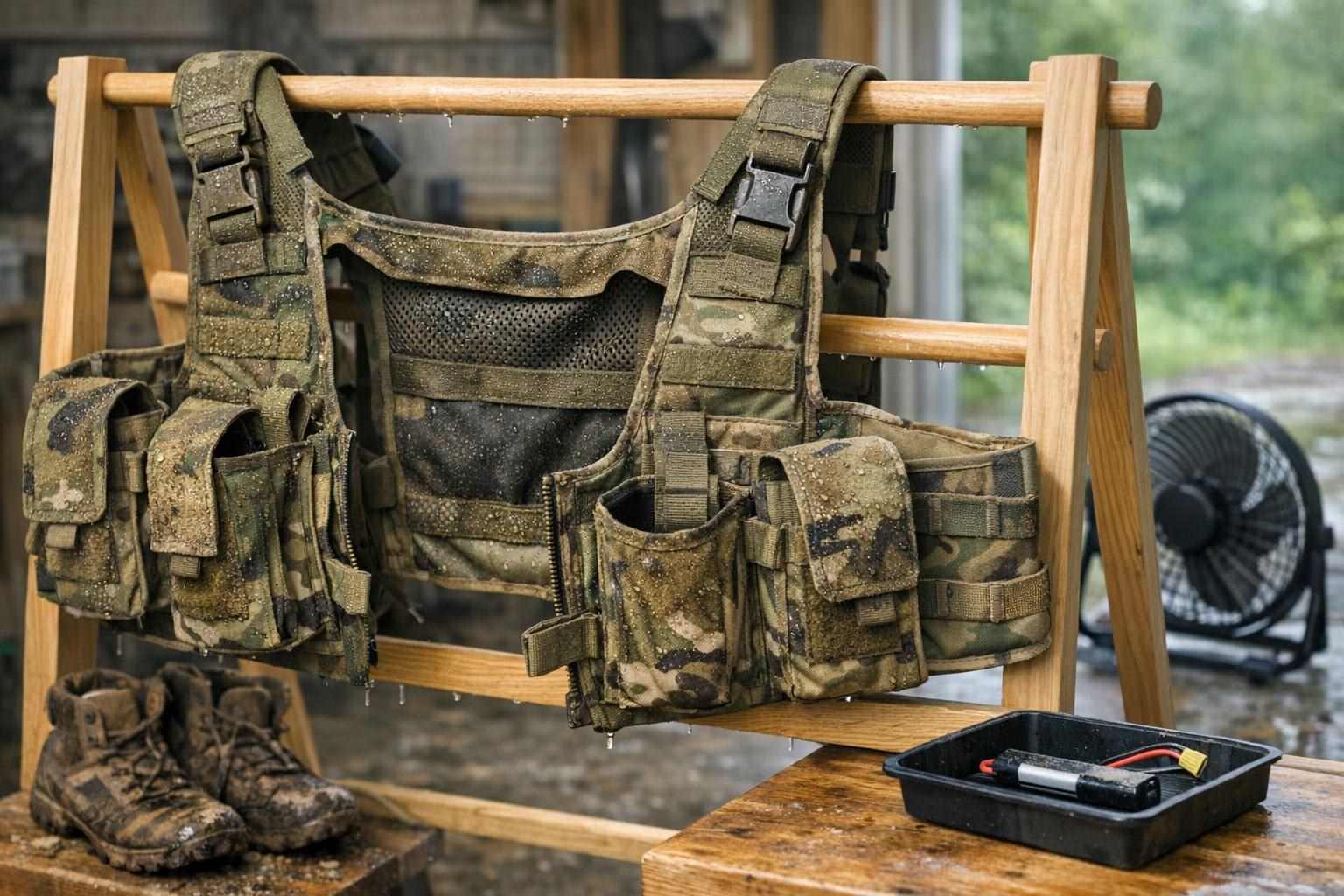
Water can penetrate into more than just clothing. It can seep into pouches, collect under covers and get into the nooks and crannies of fasteners. It can also get into batteries and optics and remain there long after the outside has dried. Implementing a sensible drying routine for your airsoft kit can prevent musty smells, corrosion and damage to equipment and save you from having to replace parts of your kit that could have been saved had they been dried properly. The key is to allow different items to dry at different rates.
Start with a wet-kit triage
Start with sorting out wet areas within your airsoft kit before packing it away in a cupboard, putting it in the back of your car or in your kit bag. Take out all your wet clothing, gloves, towel(s), batteries etc. and start to sort them out into 2 piles, one for muddy items and the other for clean kit to stop any grit from getting into any zips, buckles etc.
Many parts of the kit have obvious areas which could trap water such as the bottom of a bag, the inside of a plate carrier, the toe of a boot and under an optic cover. Also remember that although your kit may feel dry it can still contain a lot of moisture in the padding and between the seams of clothing. So open all closures and lay out all the small parts of the kit that could get lost whilst the rest of the item is drying.
Clear replicas of wet material first, remembering to remove magazines and the power source from replicas as you would normally. Note that in clearing a replica that has been submerged in water it is best to clear it in the normal safe manner and not to test fire it repeatedly to see if it is working. Initially dry the exterior of the replica and then refer to the equipment maintenance section of the replica's manual for further inspection and testing.
Give fabrics airflow, not punishment
Hang up your combat clothing, chest rigs, belts and your soft pouches to allow air to move around them. Try to spread out the thick parts of clothing as much as possible and turn garments inside out as they dry. Use a fan to circulate the air in a room to help dry clothing quickly.
Do not let to dry near strong heat (eg radiators, heaters). The adhesives, coatings and foams used in modern materials can be damaged by high temperatures. Although a warm, ventilated room is probably the best place to dry your airsoft kit, do not dry items containing nylon, laminated fabric, foam and elastic in the same room as a radiator.
For clothes that have got muddy then it's best to wash or rinse them as soon as possible. Remember to check the care label on any clothing that has gotten wet to ensure that you wash it correctly. If you're traveling home after a day on the field, then don't seal your wet clothing in a plastic bag. This can create a damp dirty pocket of air that smells bad and can take a long time to dry and get clean. Instead, hang the clothing up to dry and get cleaned as soon as possible.
Treat electronics as a separate job
Batteries are best treated with some respect as well. Detach them from the AEG, wipe off any moisture with a soft cloth and store them in a dry place (away from flammable materials) to allow them to return to room temperature. Avoid charging a wet, swollen, damaged or even just smelling bad battery as this could cause serious harm. Always refer to the manufacturer's guidance if in doubt as to whether a battery is safe for use.
Remember to clean any optics, radios, chronos and the like (i.e. anything with screens) before attempting to store them away for drying. Wipe any exterior surfaces with a soft cloth for any surface level mud. Do NOT use compressed air to clean sealed items as it may force water and grime into openings and past seals.
LENS FOG- Do not attempt to wipe or clean the exterior of fogged lenses/screws. Leaven them to air in a dry, well-ventilated area and inspect latter. Note: Condensation inside sealed items can only be cleared by the item's manufacturer. Follow the manufacturer's care instructions.
Clean replicas before storing them
Clean replicas before you pack them up for storage by wiping any mud from the surfaces of the replica using a clean and damp cloth. Dry the surface thoroughly to stop any water spots forming. Don't try to clean out any dirt that may have entered into openings etc. as this could cause further damage.
As a general rule rubber, plastic, metal and internal components of a replica all have different maintenance requirements. Most of all though, do NOT apply general purpose oil to all surfaces. Use the lubricant recommended by the maker for specific parts and surfaces only.
Also inspect the screws, pins, sling mounts and battery connectors for any signs of looseness or residue of old lubricants. Whilst a small amount of lubricant on a screw or pin may not be a problem, a replica that feels hot to touch, smells of burning or is not functioning correctly should be taken out of action and inspected by the replica maker or a suitable repairer.
Dry footwear and bags from the inside out
Many boot types can retain lots of moisture once the rest of your clothing has begun to dry. Remove the insoles, loosen the laces, and then use clean, absorbent paper to draw out the moisture from your boots. Swap out the paper for new, clean sheets as they become damp. (This also prevents you from dripping wet paper all over your other, already-dry gear when you take it out of your boots later.)
Empty the main compartment of a gear bag and turn smaller pockets inside out. Don't store wet clothing in your kit bags. Try to keep your kit bags flat and open, letting them dry out before storing them away. Muddy shoes and boots should be cleaned before being put away as well as having the insoles removed and turned inside out to help them dry more quickly.
Remember, don't store wet boots and bags with dirty socks, used clothing, and towels in them as this can transfer the odor and make a dirty mess when unpacked.
Check waterproofing before the next outing
The term "water resistant" is used differently than "fully waterproof". A waterproof layer can break down quickly. A seam can also become unstitched and new tears can occur in protective layers such as raincovers and drybags. Ensure that all parts of your waterproof gear are in good order before heading out on the next game.
Remember to clean your clothing only as the care label allows. Many clothing items are washed in specialized detergents that remove dirt, but also remove the finish of the fabric. Avoid using aggressive detergents, and do not scrub clothing. Use the right type of waterproofing for the material, and test it on a hidden patch first.
A simple recovery kit is better than trying to clean mud off your boots in the car park. Spare bags for wet kit, absorbent cloths, a soft brush for cleaning sights, and a safe place to store batteries for your Airsoft guns when not in use are essentials for the next wet game.
Finally get your Airsoft Gear Ready for the Next Game. When everything is dry make sure all straps are tight, all magazines are cleaned and will work properly, your footwear is comfortable, you are using the right batteries for your Airsoft Replicas and all your protective gear is in full working order and will be used properly.